What Makes the IB Middle Years Programme Different from Traditional Curricula?
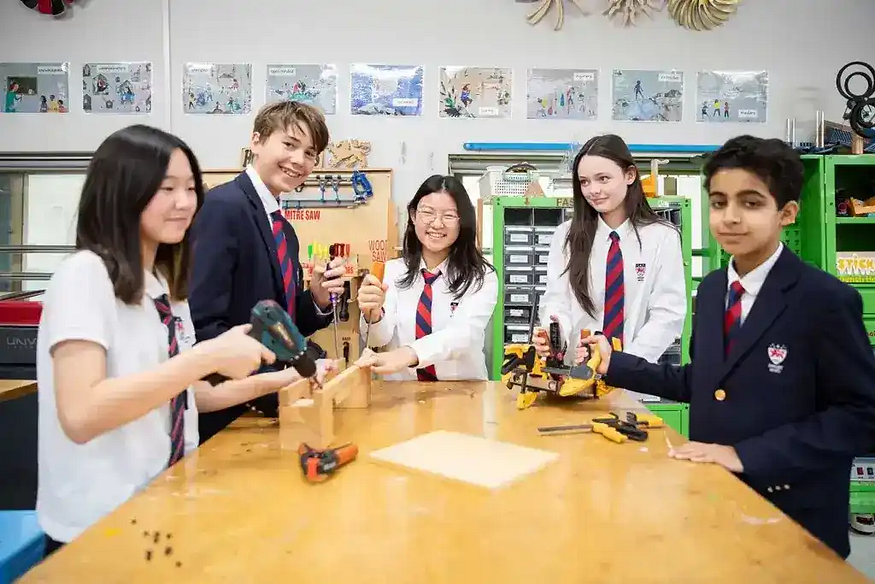
The IB Middle Years Programme (MYP) is a globally recognized educational framework designed for students aged 12–16. It provides a structured yet flexible learning environment that bridges the gap between primary education and advanced secondary programs. Unlike many traditional curricula that emphasize memorization and subject isolation, the MYP focuses on interdisciplinary learning, inquiry, and real-world application of knowledge.
Understanding what sets this program apart can help parents and students see why it has become a preferred approach in many international schools.
A Framework Designed for Real-World Learning
One of the key differences between the IB Middle Year Program (MYP) and traditional curricula is its emphasis on connecting classroom learning with real-world issues. Rather than studying subjects in isolation, the program encourages students to see how different disciplines relate to everyday challenges and global developments.
Students learn to apply knowledge across contexts, helping them develop stronger analytical and problem-solving skills. This approach encourages learners to think beyond textbooks and understand how academic concepts influence real-life situations.
A Broad and Balanced Curriculum
Traditional curricula often prioritize a limited set of core academic subjects. In contrast, the IB Middle Year Program (MYP) offers a broader educational structure that includes eight subject groups:
- Language and Literature
- Language Acquisition
- Individuals and Societies
- Sciences
- Mathematics
- Arts
- Physical and Health Education
- Design
This balanced framework ensures that students develop a wide range of academic, creative, and physical abilities. Each subject group receives dedicated learning time, supporting a well-rounded educational experience.
Interdisciplinary Learning Across Subjects
Another distinctive feature of the program is its interdisciplinary approach. Instead of treating subjects as separate fields, the IB Middle Year Program (MYP) encourages connections between them.
For example, students might combine scientific concepts with social studies to explore global issues such as sustainability or technological innovation. By linking subjects together, learners gain a deeper understanding of complex topics and develop the ability to think across disciplines.
Inquiry-Based Learning Instead of Memorization
Traditional education models often rely heavily on memorizing facts and repeating information. The MYP, however, prioritizes inquiry-based learning, where students actively explore questions, conduct research, and form their own understanding of topics.
This learning style promotes curiosity and encourages students to become independent thinkers. Through research projects, discussions, and investigations, learners build critical thinking and communication skills that are essential for academic and professional success.
Focus on Global Contexts and Cultural Understanding
Another major difference between the IB Middle Year Program (MYP) and traditional systems is its global perspective. Lessons are framed within global contexts that help students understand international issues and cultural diversity.
These contexts include themes such as identity, sustainability, technological innovation, and social fairness. By studying these topics, students develop intercultural awareness and learn how their actions can impact the wider world.
Development of Lifelong Skills
Beyond academic knowledge, the program emphasizes skills that support lifelong learning. Students develop abilities in research, communication, collaboration, and self-management, often referred to as “Approaches to Learning.”
These competencies help learners take responsibility for their education, set goals, and reflect on their progress. Such skills prepare students not only for further academic programs but also for future careers and leadership roles.
The Personal Project Experience
A unique element of the IB Middle Year Program (MYP) is the Personal Project, which students typically complete in the final year of the program. Over several months, students explore a topic of personal interest and create a project that demonstrates the skills and knowledge they have gained throughout the program.
This project allows learners to showcase creativity, independence, and critical thinking while applying the concepts they have learned during their studies.
Holistic Development Beyond Academics
Traditional curricula usually concentrate mainly on academic achievement. The MYP, however, aims to develop the whole student intellectually, socially, emotionally, and physically.
Through collaborative learning, service activities, and reflective practices, students grow into responsible and compassionate global citizens who understand their role in improving society.
Conclusion
The IB Middle Year Program (MYP) stands apart from traditional curricula because it prioritizes interdisciplinary learning, real-world connections, inquiry-based teaching, and global awareness. By combining a balanced curriculum with skill development and independent learning opportunities, the program prepares students for future academic challenges and meaningful participation in a global society.
Schools such as Dwight School Seoul implement this framework to provide students with an engaging and internationally focused educational experience that supports both academic excellence and personal growth.


Comments
Post a Comment