How Does an Inquiry-Based Curriculum Develop Critical Thinking in Young Learners?
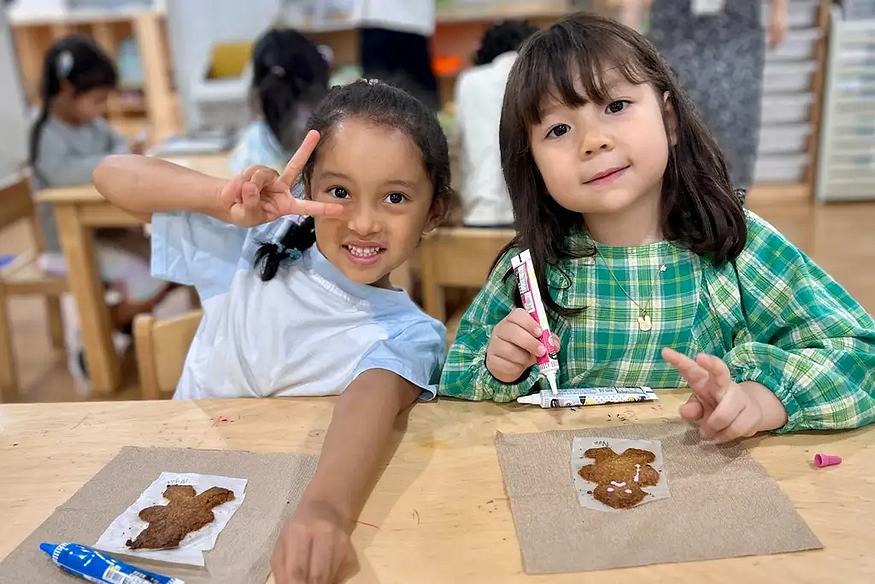
The IB Primary Year Program (PYP) uses a unique inquiry-based framework that helps young learners become critical thinkers by encouraging them to explore, question, and reflect on real-world ideas rather than simply memorizing facts. At its core, this approach invites students to take an active role in their learning, shaping their understanding through meaningful experiences and guided investigation.
1. Learning Through Inquiry, Not Memorization
Instead of traditional teacher-led instruction, the inquiry-based curriculum places students at the heart of the learning process. Children are encouraged to ask questions, investigate topics, and seek answers using a variety of resources and methods. This cycle of asking, exploring, and reflecting develops a mindset where students learn how to think rather than what to think.
By exploring questions that matter to them and to the world, learners naturally practice skills such as:
- Observing and analyzing information
- Formulating meaningful questions
- Evaluating evidence before drawing conclusions
These practices are key components of critical thinking and help young learners make sense of their learning in deeper and more personal ways.
2. Transdisciplinary Themes Connect Learning Across Subjects
The PYP’s curriculum is organized around six transdisciplinary themes broad, real-world contexts that cross traditional subject boundaries. These themes, such as How the World Works and Sharing the Planet, allow students to explore topics from different academic angles, making learning more relevant and interconnected.
Working within these themes promotes critical thinking by:
- Encouraging students to make connections between disciplines
- Helping learners see patterns and relationships across ideas
- Challenging them to apply knowledge in unfamiliar or complex situations
This transdisciplinary approach mirrors real-world problem solving and nurtures thinkers who can approach issues holistically.
3. The Learner Profile Strengthens Thinking Skills
A key part of the PYP is the IB Learner Profile, which highlights attributes like being reflective, inquisitive, and open-minded. These traits support critical thinking by encouraging students to consider different perspectives, reflect on their own ideas, and revisit assumptions as they learn.
Learners are guided to see learning as an active process where curiosity leads to exploration and reflection leads to deeper understanding. This not only builds academic skills but also fosters lifelong thinkers who engage thoughtfully with ideas.
4. Real-World Inquiry and Student Agency
Inquiry-based learning doesn’t stay confined to abstract ideas it often involves real-world investigation. Learners pose questions about topics that interest them, conduct research, collaborate with others, and share results. This process strengthens critical thinking by:
- Requiring students to plan and carry out meaningful investigations
- Encouraging analysis and interpretation of information
- Supporting students to reflect on what they’ve learned and why it matters
These experiences help children see that answers are not always straightforward and that thinking deeply and often collaboratively matters.
Conclusion
In the IB Primary Years Programme (PYP), an inquiry-based curriculum doesn’t just deliver content it develops thinkers. By centering learning around questions, real-world themes, and student curiosity, the PYP equips young learners with the ability to think critically, make connections across disciplines, and take ownership of their learning. At Dwight School Seoul, this approach empowers students to become active participants in their educational journey. These are powerful skills that set students on a path toward confident, thoughtful, and engaged lifelong learning.


Comments
Post a Comment