How Does the IB Primary Years Programme (PYP) Develop Critical Thinking, Reflection and Inquiry Skills?
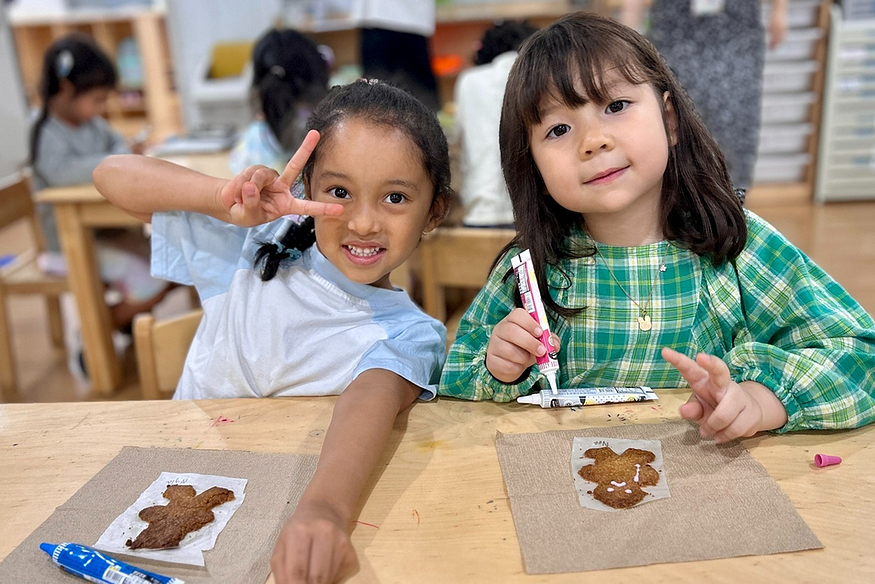
The International Baccalaureate Primary Years Programme (PYP) emphasises more than just acquiring facts: at the heart of the programme is helping young learners become inquisitive, reflective, and thoughtful thinkers. At Dwight School Seoul, the PYP is crafted specifically to nurture these skills through a range of purposeful approaches.
Below we explore how the PYP fosters critical thinking, reflection and inquiry skills.
Inquiry-Based Learning as the Engine of Thinking
One of the core features of the PYP at Dwight School Seoul is its inquiry-based curriculum. The PYP is described as a “dynamic, inquiry-based curriculum that fosters critical thinking and creativity.”
- Rather than relying solely on teacher-driven instruction, students are invited to ask questions, explore concepts, and make connections across disciplines.
- The curriculum is organised into units of inquiry (for Grade 1 there are 5 units, and for Grades 2–5 there are 6 units each) covering six transdisciplinary themes (such as “How the World Works”, “Sharing the Planet”) and integrating all six subject-areas (mathematics, science, social studies, language, arts, physical/social/personal education).
- By working through these units, students face real-world issues and are encouraged to pose meaningful questions, investigate, and draw links between areas of learning. For example, across subjects they may explore how science and social studies merge when considering environmental issues thus pushing them to think critically rather than memorise.
This inquiry structure gives students frequent opportunities to initiate their thinking, thereby nurturing curiosity, one of the key pillars of critical thinking and reflective learning.
Concept-Based and Transdisciplinary Learning for Deeper Thinking
The PYP moves beyond teaching isolated facts or skills. At Dwight School Seoul, emphasis is placed on concept-based learning and transdisciplinary approaches which inherently support higher-order thinking and reflection.
- Concept-based learning means students focus on big ideas (concepts) that transcend individual subjects such as change, systems, perspectives, responsibility. This prompts them to ask “Why?” and “How?” rather than simply “What?”.
- The transdisciplinary model means students don’t compartmentalise learning into subject silos: for example, a unit might integrate language, mathematics, science and social studies around a theme like How We Organise Ourselves. This demands critical thinking: evaluating links, reflecting on how different fields interact, applying ideas across contexts.
- The curriculum explicitly states that students are encouraged to “make connections across subject areas” and to “take ownership of their progress”.
By designing learning this way, the PYP allows students to reflect on their own thinking: “What am I learning? Why is this important? How does it connect to what I already know? How might I transfer this to other situations?”
Cultivating the Learner Profile: Critical Thinker, Reflective, Inquisitive
A further key dimension is the emphasis on the IB Learner Profile students are guided to become “confident, compassionate and internationally-minded” learners, and beyond that, the profile explicitly identifies attributes such as Critical Thinking, Reflective, Inquisitive.
- Through the PYP, students are supported to develop critical thinking: for example, evaluating evidence, analysing arguments, solving problems, making reasoned decisions.
- They are encouraged to become reflective: after investigations, students look back on their own learning, considering what they did well, what they might do differently, how their understanding has changed.
- They are nurtured as inquisitive learners: with the freedom to ask new questions, pursue lines of inquiry, challenge assumptions.
At Dwight School Seoul, the integration of the Learner Profile means that developing these skills is not an after-thought but woven into daily classroom culture and learner identity.
Ownership of Learning and Long-Term Preparation
Another important factor is how the PYP as implemented at Dwight School Seoul emphasises students learning how to learn.
- The PYP asserts that learning is not just about absorbing content but also about developing the skills to learn in new contexts. This meta-cognitive frame promotes reflection: students think about their thinking, their learning paths, their strategies.
- The programme states that students are equipped to become “lifelong learners” meaning that beyond immediate content, what they gain is the thinking and inquiry habits that will carry into future levels of education and life.
- By regularly working through units of inquiry, reflecting on their process, asking questions, connecting across subjects, students develop a mindset of active learning rather than passive reception. This strongly supports critical thinking and reflection.
Assessment, Feedback and Reflection
While the page from Dwight School Seoul does not dive into all the details of assessment, implicitly one can see that the PYP’s approach fosters reflection through feedback and evaluation of thinking processes:
- Because students engage in inquiry and investigation and connect across subjects, evaluation is likely to involve not just “correct answers” but understanding, reasoning, and transfer of learning which requires students to think and reflect on how they arrived at conclusions.
- The PYP’s regular units and the integration of reflection-friendly language (e.g., “take ownership of their progress”) suggest that students are given opportunities to reflect on their learning journey: what worked, what they still need to connect, how they might improve.
Why This Matters: Benefits of Developing These Skills
The development of critical thinking, reflection and inquiry skills through the PYP has a number of clear benefits:
- Students are prepared for a rapidly changing world: they are not just learning facts but learning how to think, question, evaluate and adapt.
- They become more confident learners: because they understand the process of their learning and can reflect and act on it, they feel agency.
- They are better equipped for future education: The PYP emphasises preparing students for the next stage (for example the middle years) by building thinking and inquiry habits.
- They grow as global citizens: Inquiry, reflection and critical thinking are essential to understanding complexity, diversity and interconnectedness key in a globalised world.
In Summary
In the context of the IB Primary Year Program (PYP), critical thinking, reflection and inquiry are not add-ons; they are central to how the curriculum is designed and delivered. By integrating inquiry-based learning, elevating concept-based and transdisciplinary approaches, embedding the Learner Profile, and emphasising student-owned learning and reflection, the programme ensures that students become not just learners of content, but thinkers, question-askers, reflectors and ultimately confident, lifelong learners prepared to navigate the complexities of the modern world. This holistic approach is at the heart of how Dwight Seoul delivers the Programme, inspiring students to grow as curious, capable and globally minded individuals.


Comments
Post a Comment