The Benefits of an IB Early Childhood Division in Preparing Children for Future Education
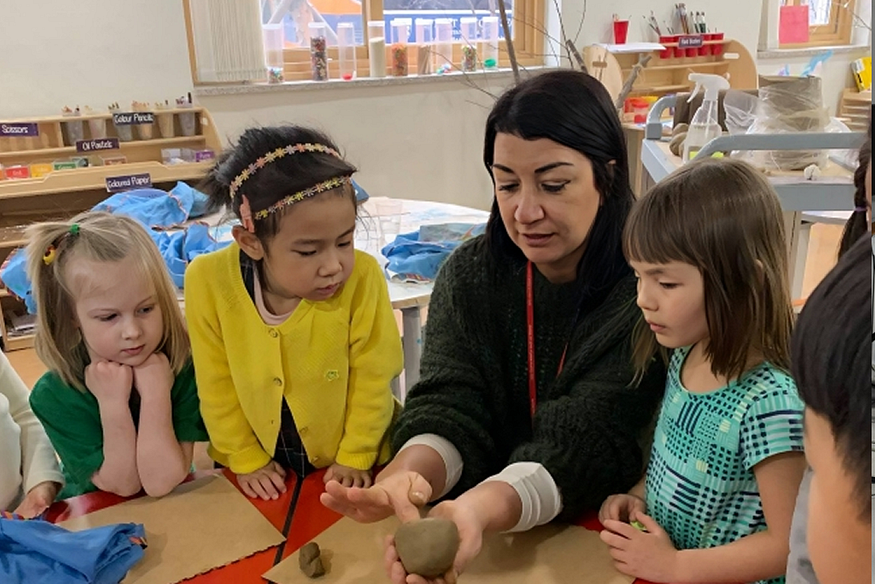
From ages 2 to 6, a child’s learning journey is filled with opportunities not just to learn facts and skills, but to develop the foundation for lifelong success. The IB Early Childhood Division (ECD) model, as implemented by Dwight School Seoul, offers a compelling blueprint for that foundation.
1. Building a Strong Academic Foundation
One of the key benefits of the ECD programme is that it fosters critical thinking, creativity, and intellectual curiosity from the very beginning. At Dwight School Seoul, the curriculum is designed so that young children develop strong literacy and numeracy skills and then explore these across subjects such as science, social studies and the arts, all in interconnected contexts.
This means that children are not just memorising isolated concepts, but are making meaningful connections between what they learn and the world around them an advantage when they move into primary and later years.
2. Holistic Development Across Domains
Another important benefit is the holistic approach: the programme emphasises not just cognitive and academic development, but also social, emotional, physical and creative growth.
By supporting children’s development across these domains, they are better equipped to adapt to new learning situations, navigate relationships and manage themselves as learners. This well-rounded readiness is a strong asset for future education.
3. Cultivating Inquiry-Based & Play-Based Learning
The ECD profile at Dwight highlights that young learners thrive when their curiosity is ignited and when learning is both inquiry-based and play-based.
Through purposeful play and inquiry, children begin to learn how to ask questions, explore solutions, create, experiment and reflect. These are skills that extend far beyond early childhood and into the rest of their schooling: they become learners who are not afraid of being active participants in their own education.
4. Developing Student Agency and Confidence
In the ECD environment described, children have a “voice in their learning journey”.
When young learners are encouraged to steer aspects of their own learning process through questions, choices, exploration they build agency. This sense of independence and confidence makes the transition to more structured schooling smoother: children are ready to take on new responsibilities, adapt to different classroom contexts, and engage meaningfully.
5. Seamless Transition and Continuity in Education
The ECD at Dwight is positioned as the foundation for the wider IB continuum from early years into primary (and beyond).
This continuity means children experience a consistent philosophy of teaching and learning as they progress, which reduces disruption, supports smooth transitions, and builds on prior learning effectively. Thus, their future education is supported by a stable, coherent journey.
6. Fostering Global Citizenship & Cultural Awareness
In an increasingly interconnected world, the ECD model’s focus on a global perspective is valuable. At Dwight, the curriculum encourages multilingualism, cultural awareness and global citizenship even in the youngest learners.
Such early exposure helps children adapt to, understand and thrive in diverse learning environments and prepares them for education in international contexts, as well as for later life in a global society.
7. Safe, Inviting and Supportive Learning Environment
One of the less-often-mentioned but crucial benefits: the physical and relational environment. The ECD programme emphasises safe, inviting spaces, and strong relationships between students, teachers, peers and community.
When children feel secure, valued and connected, they are more willing to explore, take risks, engage meaningfully and that openness to learning becomes part of their educational mindset going forward.
Conclusion
When crafted thoughtfully, the IB Early Childhood Division (ECD) offers far more than just an introduction to school: it lays down the building blocks for future academic success, personal growth and a lifelong love of learning. With its integrated curriculum, emphasis on inquiry and play, focus on agency, continuity and global outlook, the ECD model positions children to move confidently into primary school and beyond.
At Dwight School Seoul, the ECD programme encapsulates these benefits making it a strong first step in a child’s educational journey.


Comments
Post a Comment